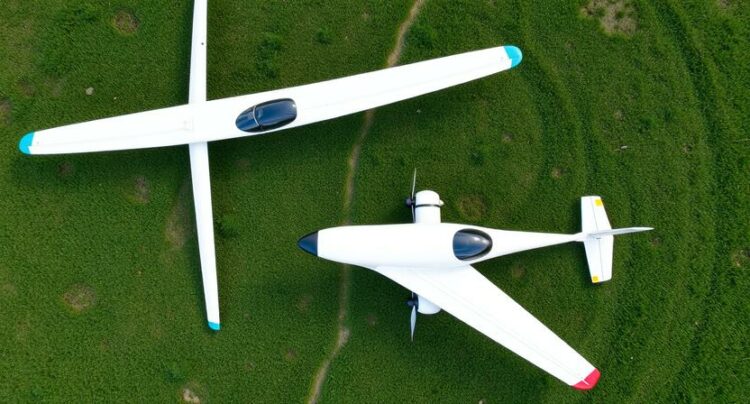
Many people assume a glider is simply a smaller or slower airplane. At first glance, both aircraft look alike. They have wings, a cockpit, flight controls, and pilots. But once they leave the ground, the similarities quickly fade.
The difference between a glider and an airplane comes down to one major factor: power. Airplanes rely on engines to keep moving through the sky, while gliders fly without engine power by using natural air currents and aerodynamic efficiency.
For aspiring pilots, aviation enthusiasts, or anyone curious about how flight works, understanding the difference between gliding and flying can completely change the way you think about aircraft. Some pilots even say gliding teaches the purest form of aviation because every movement depends on skill, weather awareness, and energy management.
In this guide, we break down glider vs plane comparisons in detail, including how they launch, how they stay airborne, training differences, costs, safety, and which type of flying may be best for you.
What Is a Glider?
A glider, also called a sailplane, is an aircraft designed to fly without continuous engine power. Unlike powered airplanes, gliders rely on gravity, lift, and rising air currents to remain airborne.
Gliders are built with extremely long, narrow wings that maximize aerodynamic efficiency. Their lightweight construction allows them to travel long distances while slowly losing altitude.
After launch, a glider pilot searches for sources of rising air such as:
Thermals
Thermals are rising columns of warm air created by uneven heating of the Earth’s surface. Glider pilots circle inside these columns to gain altitude.
Ridge Lift
When wind hits a hill or mountain, the air is forced upward. Gliders can ride this upward-moving air along ridgelines.
Wave Lift
Mountain waves occur when strong winds flow over mountain ranges, creating smooth upward air currents that can carry gliders to extremely high altitudes.
Without these natural sources of lift, a glider gradually descends until landing.
What Is an Airplane?
An airplane is a powered aircraft that uses an engine and propeller, or jet engines, to generate thrust. That thrust pushes the aircraft forward, allowing the wings to create lift continuously.
Unlike gliders, airplanes can:
- Climb under engine power
- Maintain altitude without rising air
- Travel longer distances on demand
- Carry heavier passengers and cargo
- Operate in a wider range of weather conditions
Most airplanes used for pilot training are small single-engine aircraft such as the Cessna 172 or Piper Cherokee.
Airplanes give pilots more flexibility because they are not dependent on atmospheric lift to stay airborne.
Glider vs Airplane: The Biggest Differences
Although both aircraft obey the same aerodynamic principles, their operation and flying experience differ significantly.
Engine Power
The most obvious difference between glider and aeroplane operation is engine use.
A traditional glider has no engine during normal flight. It depends entirely on lift and efficient aerodynamics.
An airplane uses engine power throughout the flight for takeoff, climbing, cruising, and sometimes landing adjustments.
Some modern gliders do have small auxiliary engines, but these are mainly used for self-launching or emergency purposes.
Launch Methods
How Gliders Launch
Because gliders lack engine power, they need assistance to get airborne.
Common launch methods include:
Aero Tow
A powered airplane tows the glider into the air using a rope. Once at altitude, the rope disconnects and the glider continues independently.
Winch Launch
A ground-based winch rapidly pulls the glider into the air using a cable. This method is common at glider clubs because it is less expensive.
Self-Launching Gliders
Some modern sailplanes have retractable engines that allow independent takeoff.
How Airplanes Take Off
Airplanes simply use engine thrust to accelerate down the runway until enough lift is produced for takeoff.
This gives powered aircraft much greater operational independence.
How They Stay Airborne
This is where gliding vs flying becomes most interesting.
Airplanes Stay Airborne Using Thrust
An airplane engine constantly pushes the aircraft forward. As air flows over the wings, lift is created continuously.
As long as fuel and engine power remain available, the airplane can maintain altitude.
Gliders Stay Airborne Using Lift and Efficiency
Gliders convert altitude into forward motion. They slowly descend while moving ahead.
Their highly efficient wing design allows them to travel impressive distances with minimal altitude loss. In favorable weather conditions, pilots can gain altitude repeatedly by finding rising air currents.
Some competitive glider flights cover hundreds or even thousands of miles without engine power.
Wing Design Differences
One of the easiest ways to identify a glider vs airplane is by looking at the wings.
Glider Wings
Gliders have:
- Very long wings
- Narrow wing shape
- High aspect ratio
- Minimal drag design
These features maximize lift and reduce sink rate.
Airplane Wings
Airplanes usually have:
- Shorter wings
- Broader wing profiles
- Designs optimized for speed, stability, and payload
Powered aircraft balance aerodynamic efficiency with engine capability.
Cockpit Differences
Glider Cockpits
Glider cockpits are typically compact and minimalist. Instruments focus heavily on altitude, climb rates, and navigation.
Pilots pay close attention to variometers, which indicate rising or sinking air.
Airplane Cockpits
Airplane cockpits usually include:
- Engine instruments
- Fuel gauges
- Electrical systems
- Navigation systems
- Communication radios
- Advanced avionics
Powered aircraft require more system management during flight.
Gliding vs Flying: The Pilot Experience
Many pilots describe gliding as more peaceful and technical than powered flying.
What Gliding Feels Like
Without engine noise, glider flying feels incredibly smooth and quiet. Pilots become highly aware of wind, lift, and atmospheric movement.
Every decision matters because altitude acts like fuel. Once lost, it cannot easily be regained without finding lift.
Glider pilots constantly think about:
- Energy management
- Wind direction
- Lift sources
- Landing options
- Weather patterns
What Airplane Flying Feels Like
Airplanes offer greater convenience and flexibility. Pilots can climb, cruise, and travel directly to destinations without depending on weather lift.
Powered flying often focuses more on navigation, communication, and aircraft systems.
For travel and transportation, airplanes are far more practical.
Is Gliding the Same as Flying?
Technically, yes. Gliding is a form of flying because both aircraft generate lift through airflow over the wings.
However, when people ask, “is gliding the same as flying,” they usually mean whether the experience and operation are identical.
They are not.
The main distinction is how energy is managed.
Flying in an Airplane
Engine power creates continuous thrust.
Flying in a Glider
The pilot must carefully conserve altitude and use atmospheric lift efficiently.
That difference creates two very different pilot mindsets.
What Is the Difference Between Flying and Gliding?
The difference between flying and gliding comes down to propulsion and energy use.
Flying
In general aviation, flying usually refers to powered flight using engines.
Gliding
Gliding refers to unpowered or minimally powered flight where lift and gravity maintain motion.
Both require piloting skill, but gliding places heavier emphasis on aerodynamics and weather interpretation.
Training Differences
Glider Pilot Training
Glider training focuses heavily on:
- Aerodynamics
- Energy management
- Weather and thermals
- Precision landings
- Coordinated flight
Because gliders lack engine recovery options, pilots learn disciplined flight planning from the beginning.
Airplane Pilot Training
Airplane training includes:
- Engine operations
- Navigation
- Radio communication
- Fuel management
- Airspace procedures
- Emergency systems
Powered pilot training is usually broader because airplanes have more systems and operational complexity.
Which Is Harder to Learn?
This question sparks constant debate among pilots.
Why Some Say Gliders Are Harder
Glider pilots must:
- Read weather constantly
- Maintain precise airspeed
- Plan landings carefully
- Manage energy continuously
Mistakes are less forgiving because there is no engine available to regain altitude.
Why Some Say Airplanes Are Harder
Powered aircraft involve:
- More systems
- Complex airspace
- Radio communication
- Navigation procedures
- Instrument flying
- Engine management
Each type of flying develops different skills.
Many aviation instructors believe glider pilots often develop stronger stick-and-rudder skills early in training.
Safety Differences
Both gliders and airplanes can be operated safely with proper training and maintenance.
Glider Safety
Glider pilots must always maintain awareness of landing options because they cannot rely on engine power.
However, glider training often creates highly disciplined pilots with excellent energy management skills.
Airplane Safety
Powered aircraft provide flexibility and recovery options, but engine failures, fuel issues, and system malfunctions introduce additional risks.
Safety depends far more on pilot judgment and training than aircraft type alone.
Cost Differences
Glider Flying Costs
Glider flying is often less expensive because:
- Fuel costs are lower
- Maintenance can be simpler
- Club operations reduce expenses
Many pilots join soaring clubs to share aircraft and launch costs.
Airplane Flying Costs
Powered aircraft usually cost more due to:
- Fuel consumption
- Engine maintenance
- Insurance
- Hangar fees
- Higher rental rates
For budget-conscious aviation enthusiasts, gliding can be a more affordable path into aviation.
Can a Glider Fly Without Descending?
Not permanently.
Even the most efficient glider gradually loses altitude in still air. However, by using rising air currents, pilots can climb and remain airborne for many hours.
World-class glider pilots have stayed airborne for extended periods and traveled remarkable distances using only atmospheric energy.
Can Airplanes Glide?
Yes. Every airplane can glide to some degree if engine power is lost.
In fact, understanding glide performance is a critical part of emergency training for powered pilots.
However, airplanes are generally much less efficient gliders compared to sailplanes because their designs prioritize powered performance.
Who Should Choose Gliding?
Gliding may be ideal if you:
- Love pure stick-and-rudder flying
- Enjoy weather and aerodynamics
- Want lower-cost flight training
- Prefer peaceful, quiet flight
- Enjoy technical skill development
Many airline pilots begin with glider training because it builds strong foundational flying skills.
Who Should Choose Airplanes?
Powered airplanes may be better if you:
- Want to travel long distances
- Need transportation flexibility
- Enjoy navigation and systems
- Plan to pursue airline careers
- Prefer independent operation
Airplanes offer greater versatility for practical transportation and professional aviation paths.
Government Aviation Resources
Federal aviation authorities provide detailed information on both glider and airplane pilot certification.
United States Federal Aviation Administration
https://www.faa.gov
FAA Glider Flying Handbook
https://www.faa.gov/regulations_policies/handbooks_manuals/aviation/glider_handbook
Final Thoughts
The glider vs airplane debate is not about which aircraft is better. It is about what kind of flying experience you want.
Gliders offer quiet, highly technical flight that depends on atmospheric energy and pilot precision. Airplanes provide powered freedom, convenience, and transportation capability.
Both forms of aviation teach valuable skills and offer unforgettable experiences in the sky.
For many pilots, gliding becomes a lifelong passion because it strips aviation down to its purest form: understanding air, energy, and the art of flight itself.